From “Just a Cramp” to a Calf Strain: My Twin Lakes Triathlon Reality Check
If you know me, you know I am not exactly the poster child for mobility work. I stretch when I have to, avoid it when I can, and have spent years convincing myself that swimming, cycling, and running are mostly sagittal-plane movements—so I really don’t need much mobility work.
That argument has worked… until it hasn’t.
Every year north of age 35, I seem to get humbled a little more often. Recovery is not as automatic as it used to be, and I definitely feel races and hard training days more than I did in my 20s. The Twin Lakes Triathlon gave me my latest lesson.
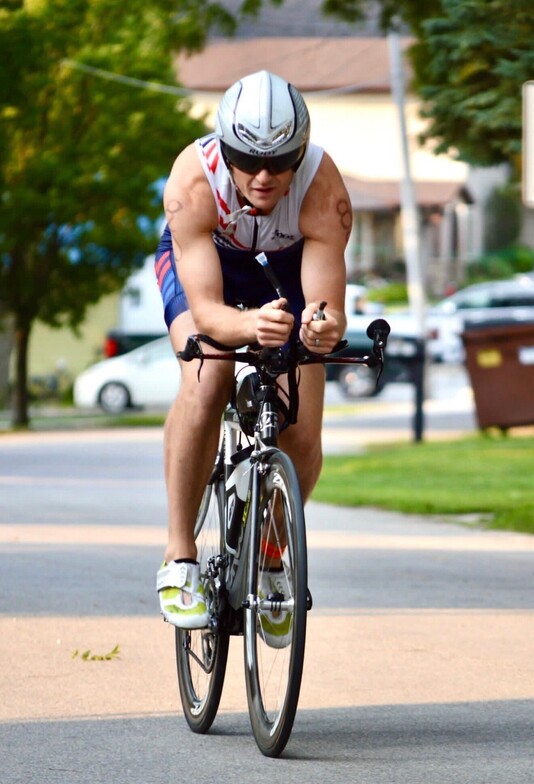
When My Calf Started Talking The race was going well. My pace felt solid, the run was moving along, and I was feeling pretty good heading into the 5K.
Then, right around mile two, my left calf started talking.
At first, it felt like it was on the verge of cramping. Nothing dramatic—just that warning sensation that makes you start negotiating with your body. I dialed the pace back a little and hoped it would settle down enough to get me through the finish.
With about a half mile left, I tried to push the pace again.
My calf was not having it.
What should have been a strong finishing kick turned into a slow, uneventful, and honestly pretty pathetic-looking finish. To make matters worse, there was a 70-year-old gentleman in front of me that I simply could not pass. I fell behind him as my calf tightened up, and it was a definite blow to the ego.
I finished the race and still performed well overall, but this was my first real calf issue while running.
It Wasn’t Just a Cramp
What I initially assumed was a simple cramp turned out to be a mild calf strain.
As the day went on, the calf continued to tighten. After sitting for a while, the first few steps of walking came with a limp and that familiar “I don’t want to load this” sensation. That is usually a pretty good sign that the tissue needs more than hydration, wishful thinking, and a couple days off.
For a mild grade 1 muscle strain, the goal early on is not to completely ignore it—or to aggressively punish it. The goal is to calm the tissue down, restore comfortable motion, improve circulation, and gradually reload the muscle so it can handle running again.
My treatment plan included:
- Stretching to restore motion and reduce the feeling of calf tightness
- Cupping to help address surrounding fascial and muscular restriction
- Dry needling to target the irritated calf tissue and improve neuromuscular tone
- Graston Technique after the initial tissue irritability settled down, helping address soft-tissue restriction and guide the tissue back toward more normal movement
Dry needling was the more invasive piece of the plan, but it was also the intervention I felt made the biggest difference early on. Once the calf began responding, Graston Technique became a great next step to help improve tissue mobility and make sure the area did not stay stiff and guarded.
Of course, treatment is only part of the equation. A calf strain still needs appropriate loading, a gradual return to speed work, and enough recovery to avoid turning a small issue into a longer-term setback.
The Real Test Came Early
In theory, this sequence should have me in good shape for my next race in a few weeks.
But my calf got tested much earlier than I would have preferred—thanks to my 10-year-old son, Carson.
Every year on my birthday, I challenge my kids to a one-mile time trial. Until they turn 18, anyone who beats my time wins $100.
We missed the event on my birthday because of travel, but Carson had not forgotten. He is a clever kid, and money tends to burn a hole in his pocket. He had recently bought an electric scooter and was a little cash-strapped.
He also knew my calf was not perfect.
The other night, I got home from work and Carson came up to me out of breath with his mile time: 6:31.
I’ll be honest—I was a little nervous. A 6:31 mile is no joke for a 10-year-old, especially when Dad is coming off a calf strain and has been humbled by a 70-year-old at a triathlon just days before.
I quickly changed, actually stretched—which may be the most surprising part of this entire story—and took off.
Lungs burning. Legs hurting. Pushing harder than my body wanted to.
But I edged him out with a 6:21 mile.
Carson was bummed, but I was incredibly proud of him. And I will legitimately have to train if I want to beat him next year.
The Lesson I Keep Relearning
The good news: my calf held up. No cramping, no strain symptoms, and no post-run limp. The treatment approach worked, and I survived another year of the birthday mile challenge.
The bigger lesson is one I continue to learn the hard way: mobility, recovery, and tissue maintenance matter—especially as we get older and keep asking our bodies to perform like we are not.
You do not need to spend an hour every day doing mobility drills. But a little intentional work can go a long way:
- Warm up before hard efforts.
- Add mobility where you are consistently restricted.
- Strengthen tissues in the positions where you need them most.
- Address small warning signs before they become race-day problems.
- Do not wait until your 10-year-old is threatening your $100 before you decide to stretch.
If you are dealing with calf tightness, recurring cramps, a running injury, or a muscle strain that just will not settle down, our team at Synergy Health can help you build a plan to get back to training with more confidence—and hopefully finish ahead of the 70-year-olds next time.