When KCCI here in Des Moines started reporting recent spikes in nitrate levels across the water system, it caught my attention. Nitrates are one of those sneaky things that sound harmless — they occur naturally in soil and water — but in excess, they can be concerning, especially for infants, pregnant women, or anyone with underlying health issues. According to my boss/wife, Alyson Vosberg, ARNP, nitrates can interfere with oxygen transport in the blood, contribute to oxidative stress, and in long-term exposure, even raise the risk for certain cancers. Bottom line: what’s in your water matters more than most people realize.
If you’ve ever heard of a reverse osmosis (RO) system, you know it’s essentially the gold standard for water purification. RO uses a semipermeable membrane to remove contaminants at the molecular level — not just nitrates, but also chlorine, fluoride, pharmaceuticals (including bir, heavy metals, and microplastics. It’s one of the few filtration methods that can take your tap water and make it taste like something bottled straight out of a mountain spring.
The Setup: How We Did It
After researching several systems, I landed on the Waterdrop G3P600. Installation was impressively straightforward — even though there was one nerve-wracking moment involving my granite countertops and my frugality and I trying to go for the proverbial ‘chipper chicken’ with a bargain bit (2 for $16 hole saw) instead of the trusted name brand bit. Luckily, with enough scutinity from my wife, I went with the Milwaukee 1" diamond hole saw (link here). Ultimately, that small upgrade in bits staved off what could’ve been an entire kitchen remodel—or a divorce. Thankfully, no cracks. No divorce. Only clean water.
To make sure our fridge was getting the same high-quality water as the faucet, I added the Waterdrop mini pressure tank to push water to both lines. Because let’s be honest — there’s no point in having clean drinking water if your ice cubes are sketchy. The last step was adding a remineralization filter to introduce back healthy minerals like calcium and magnesium, so the water tastes more natural and supports electrolyte balance.
In the end, our setup looks like this:
TAP WATER → WATERDROP RO SYSTEM → MINI PRESSURE TANK → REMINERALIZATION FILTER → T-FITTING → NEW FAUCET LINE + REFRIGERATOR LINE
The Results
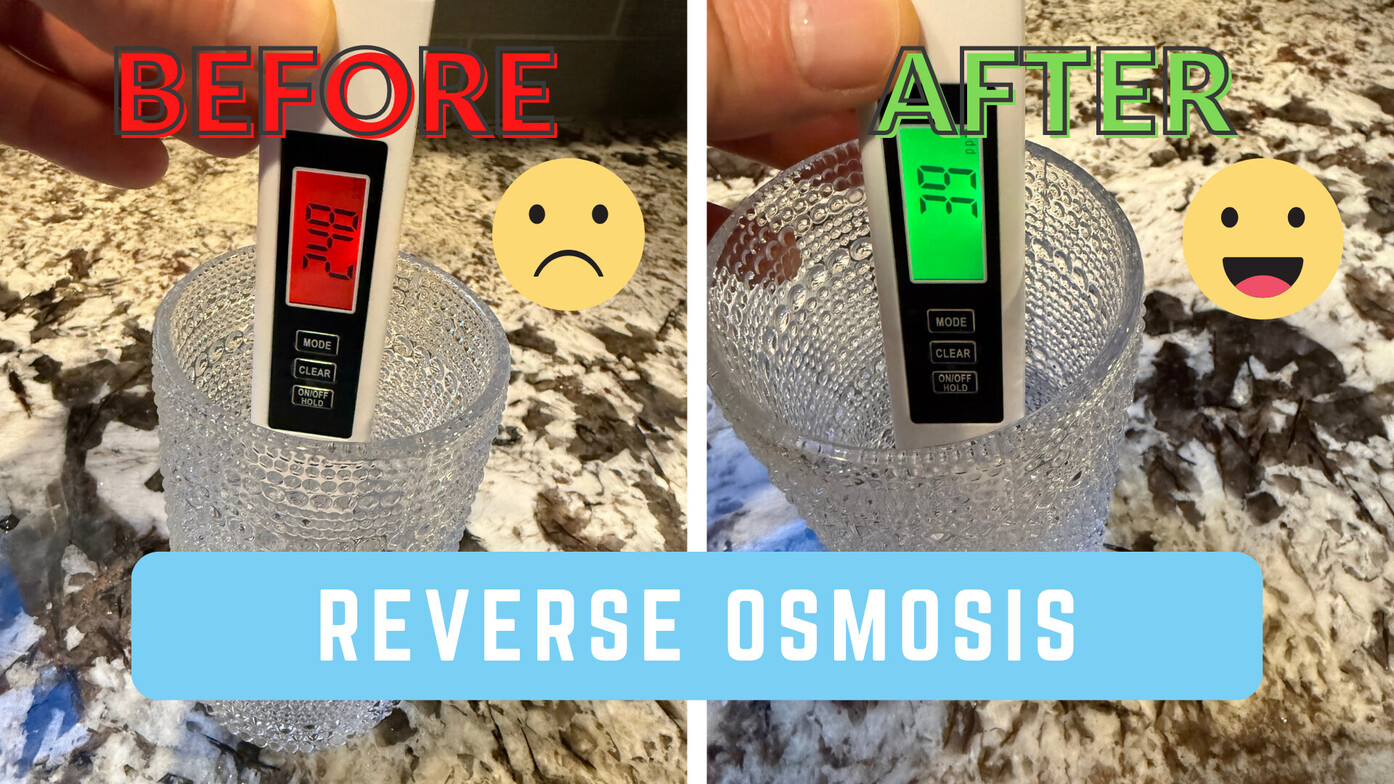
Before filtration, our tap water measured a total dissolved solids (TDS) level of 248 ppm (parts per million). After RO, the TDS dropped to 18 ppm—a massive 92.7% reduction in dissolved impurities—then with the remineralization filter, our final TDS settles at 39 ppm for perfect taste and added health benefits. The taste difference is dramatic; it genuinely reminds me of spring water. And perhaps the best part? I can tell my kids “drink more water” without the irony of knowing it’s filled with nitrates.
Why It Matters
Clean water is foundational to every system in your body — from the cellular level up. It supports detoxification, energy metabolism, hormone balance, and even brain function. In a time when environmental exposures are increasing, taking control of what goes into your body is a powerful act of health sovereignty.
For us, it wasn’t just a home improvement project — it was a step toward living intentionally, one sip at a time.