
At Synergy Health, we specialize in functional medicine and chiropractic care, and one thing we hear over and over is, “I’m doing everything right, but I still wake up sore and tired.” In our Johnston clinic, poor sleep is a quiet culprit behind neck pain, low back stiffness, and that heavy, low‑energy feeling so many of our patients describe.
This guide pulls from evidence‑based strategies we use with our patients, focusing on sleep positions, pillows, and mattresses—the three things that show up over and over in pain‑free mornings (and smoother‑down‑nights). If you’re constantly waking with tension, this is a great place to start.
Why Sleep Matters for Your Health
Better sleep doesn’t just make you feel “less tired.” It sharpens focus, helps regulate weight, lowers stress, and supports immunity and creativity. When sleep is off, everything feels heavier—your workouts, your workday, and even your mood.
Insomnia affects 10–40% of adults every year, and even partial sleep loss can chip away at productivity and recovery. Adults truly thrive on about 7–9 hours per night; when you carry a sleep debt, you’re more likely to feel musculoskeletal pain and notice metabolic changes like sluggish energy or weight that won’t cooperate. In our clinic, we often see patients whose pain and fatigue improve dramatically once we address their sleep habits and setup.
Ideal Sleep Positions
If you’re a stomach sleeper, here’s a gentle prod: stomach sleeping is a prime suspect for stiff necks, headaches, shoulder pain, and low back compression. When you’re face‑down, your head is usually twisted to one side, and your hips can sink into the mattress, which can tweak the spine through the night.
The goal is to keep your spine as neutral as possible. That usually means back or side sleeping.
-
Back sleepers: Tuck a pillow or small bolster under your knees (Amazon – Bolster Pillow) to ease pressure on the low back.
-
Side sleepers: Place a pillow between your knees (Amazon – Thigh Pillow) to keep the hips aligned and the spine stacked.
If you’re dealing with shoulder pain right now, we often nudge patients toward back sleeping temporarily, so the shoulder isn’t compressed all night.
Pick the Right Pillow
Your pillow should support a neutral neck position: ears stacked over shoulders, without your chin tucking into your chest or your head tilting back.
-
Back sleepers usually do well with 3–5 inches of loft.
-
Side sleepers often need 4–6 inches, depending on shoulder width.
Choosing the right pillow is honestly a bit of a Goldilocks situation. What feels perfect for one person can feel like a brick or a deflated balloon for someone else. The key is to ditch stacked or flattened pillows that strain muscles and instead opt for something that gently supports your neck through the night.
It can take a few weeks to adjust to a new pillow; your body has to unlearn its old habits. My personal go‑to is the Amazon – Sleep Innovations Pillow, but it gave me headaches for the first two weeks. Now I can’t imagine sleeping without it. That’s a reminder that a pillow “feeling weird” at first doesn’t mean it’s wrong—it may just mean your body is recalibrating.
Master Mattress Selection
Picking the right mattress is a lot like hunting for the perfect pair of shoes: too firm and it jabs your pressure points; too soft and your hips sink, twisting your spine—either scenario can lead to morning aches and pains.
We often use the SLEEP acronym from the Better Sleep Council to help patients test options:
-
Select short‑listed mattresses
-
Lie in your usual position for at least 15 minutes
-
Evaluate support and comfort
-
Educate yourself on types
-
Partner test it (if you share a bed)
Ideally, you should replace your mattress every 7–10 years, or sooner if you notice you wake up with back pain that eases after moving around (not chronic, ongoing pain, which should be evaluated clinically). When you shop, set a budget, stick to trusted stores, and use trial periods. After all, you’re investing $1,000–4,000 in something that holds your body for a third of your life; you shouldn’t have to “settle” into compromise.
Mattress Types Compared
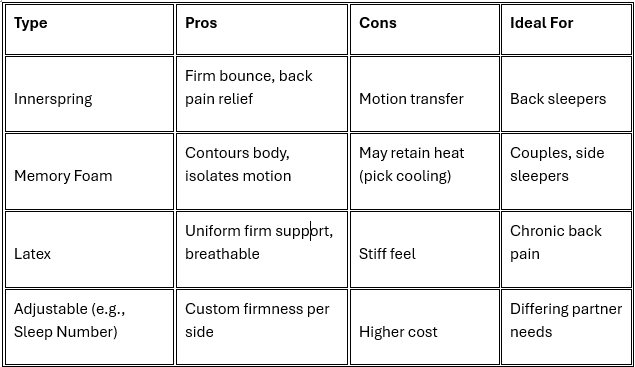
At Synergy Health, we look at sleep as part of your overall recovery strategy, not as an afterthought. Small tweaks to your sleep setup, position, and pillow can quietly transform how you feel during the day—from less neck tension and low back stiffness to more steady energy and clearer focus.
If neck tension, back pain, or fatigue persists, we invite you to stop by our Johnston clinic. You can reach us at www.synergyhealthiowa.com or contact us directly to talk through a personalized plan that honors your lifestyle and your body.
Your best day truly starts with better sleep—let’s make sure your bed is finally working for you.